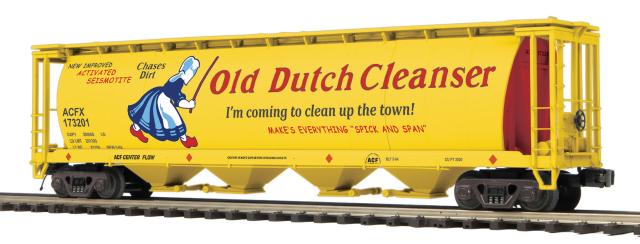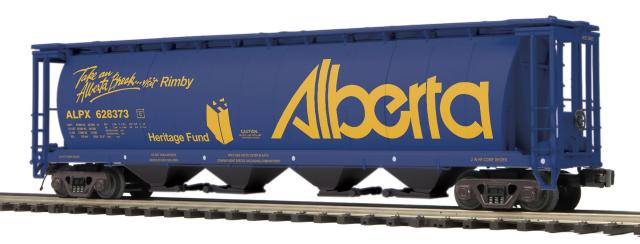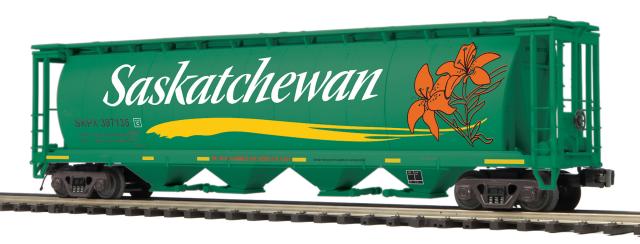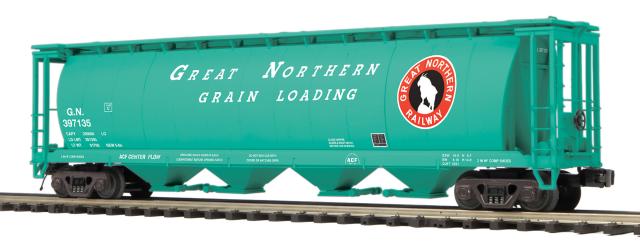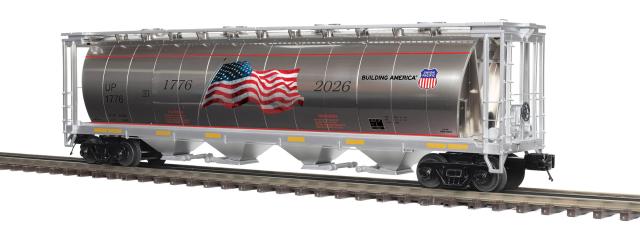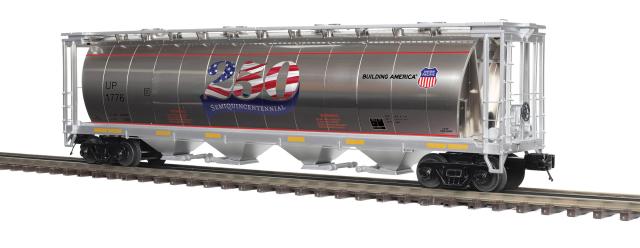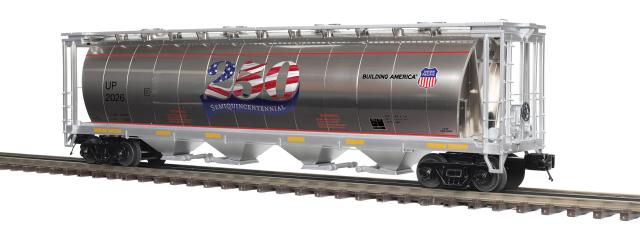

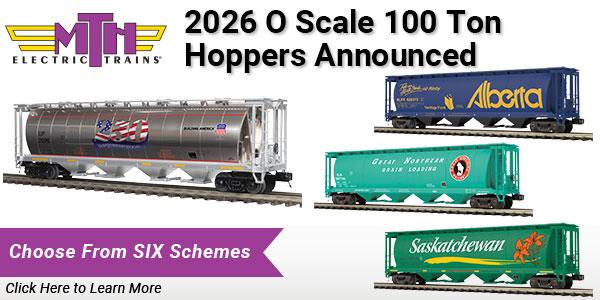
March 31, 2026 - M.T.H. Electric Trains will be releasing a 2026 Premier O Scale 100 Ton Hopper in SIX different schemes during the Winter of 2026. Each scheme will be offered in two car numbers in very limited quantities beginning in December 2026 .
Check out each of the offerings in the scrolling list at the bottom of the page.
PROTOTYPE HISTORY
Once relatively unusual, covered hoppers are one of modern railroading’s most common cars, transporting bulk commodities from grain to cement and a variety of powdered and granular products such as raw plastic pellets. The modern cylindrical covered hopper was pioneered by American Car and Foundry in 1961. Up to that time, the typical covered hopper was basically a coal hopper with a roof. Like most freight cars, covered hoppers had a center sill that ran down the middle, and unloading doors were placed on either side of the sill. Some of the load would invariably cake on the center sill, and cars would have to be vibrated to loosen the product and fully empty the car.
ACF’s innovation was the Center Flow design. The frame members were moved to the outside of the car, the hopper body was made cylindrical, and the unloading doors were moved to the center line of the car, at the bottom of the cylinder. The result was a car that unloaded more completely with less work and had a larger load capacity as well.
Our model is based on the Government of Canada hoppers constructed in Canada by several car builders in the late 1970s an d early 1980s and still in service today. A government Web site explains the story behind the cars: “There are approximately 12,100 railway hopper cars in the Government of Canada fleet, which form the core of rolling stock used by the Canadian National Railway and Canadian Pacific Railway to move western grain. These cars are provided at no cost to the railways for the transportation of grain from the Prairies to the ports of Vancouver and Prince Rupert, British Columbia, and Churchill, Manitoba, for export, or to Thunder Bay and Armstrong, Ontario, for domestic or export purposes. The railways have day-to-day control of the cars and allocate them to grain shippers on a commercial basis. The Government of Canada receives annual alternate-use revenues from the railways when the cars are not used in regulated grain service.”
Check out each of the offerings in the scrolling list at the bottom of the page.